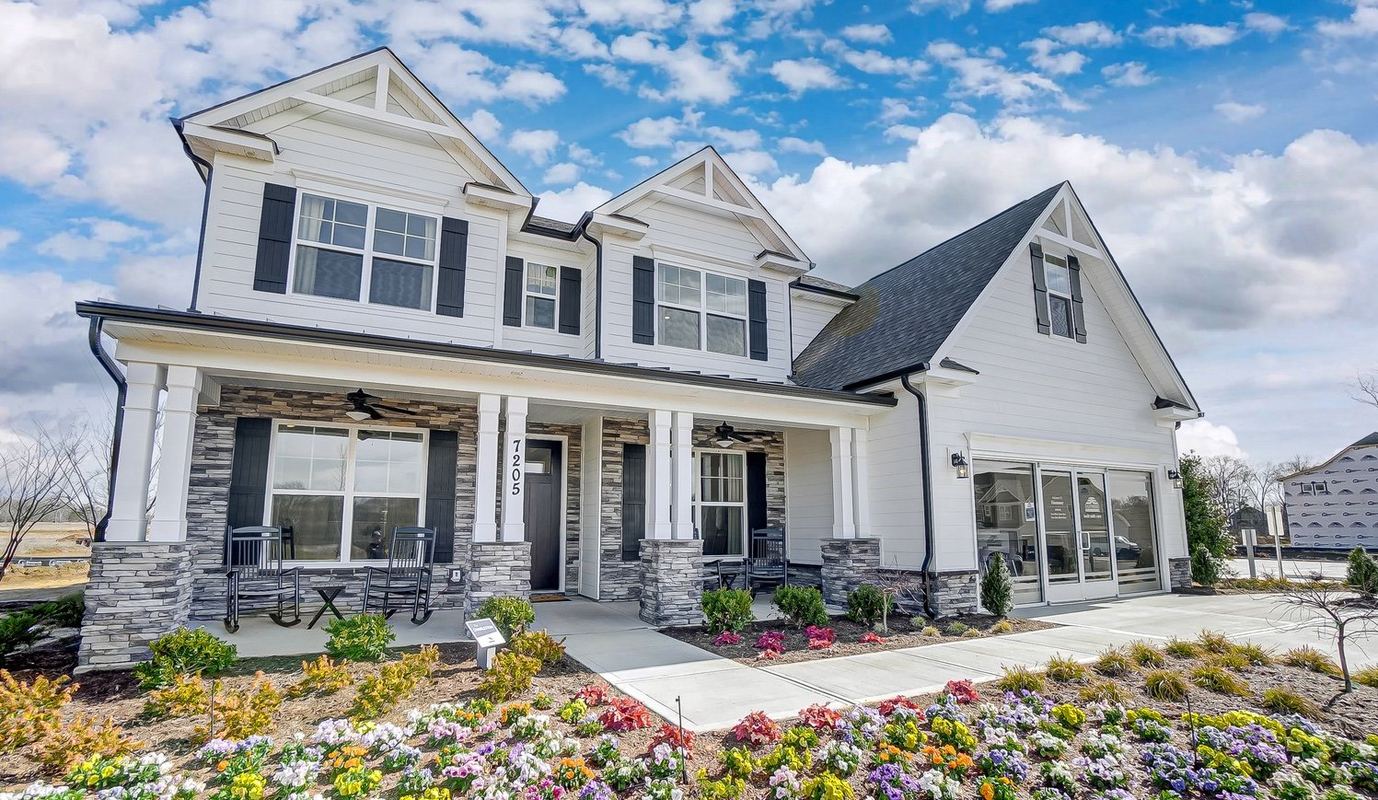
River District HOA Fees, Property Taxes & True Monthly Cost (2026 Guide)
Buying a new construction home in River District Charlotte, NC involves more than comparing base prices between builders. The advertised "starting from" figure is the beginning of a conversation — not the number that appears on your closing disclosure. HOA fees, property taxes, insurance, and builder upgrades all contribute to a monthly payment that can look meaningfully different from what you budgeted when you first toured a model home.
This guide is for buyers who want financial clarity before they commit. We've covered the broader question of whether River District is worth buying into in a separate article. Here, the focus is narrower: what does it actually cost to live here each month, and what are the line items buyers most commonly underestimate?
Before you tour a model home, read our River District builder comparison to understand which builders are active, what product types they offer, and how their incentive structures differ. That context matters when you're calculating a realistic monthly payment.
How Much Does It Really Cost to Live in River District?
The gap between a builder's advertised base price and a buyer's actual monthly payment is one of the most consistent sources of sticker shock in new construction. River District is no exception. The base price gets you a home — but it does not get you the home you walked through in the model. It does not include the lot you want. And it does not reflect the tax bill that arrives after your home is assessed at its completed value.
A realistic monthly cost calculation for a River District home includes at minimum five components: mortgage principal and interest, property taxes, HOA dues, homeowners insurance, and any lender-required escrow items. Each of these has variables that buyers control — or fail to account for — before signing a purchase agreement.
River District Base Price vs. Final Purchase Price
Builder base prices in River District represent the minimum cost of a specific floor plan on a standard lot with no upgrades. In practice, the final contract price is almost always higher. Understanding the four main categories of cost escalation helps buyers set a realistic ceiling before they visit the design center.
Structural Upgrades
Structural options — additional bedrooms, finished basements, extended garages, bonus rooms, or covered outdoor living spaces — are selected early in the build process and cannot be added later. These are also among the most expensive upgrades, often adding tens of thousands of dollars to the contract price. Builders typically present structural options at the initial purchase agreement meeting, before the design center visit, which means buyers need to have a clear budget ceiling before they sit down to review options.
Lot Premiums
Not all lots are priced equally. Corner lots, cul-de-sac lots, lots with wooded buffers, and lots with views or backing to open space typically carry premiums above the base lot price. In a community like River District — where proximity to trails, greenspace, and the Catawba River is a primary selling point — lot premiums on desirable homesites can be meaningful. Buyers who focus only on the base price and ignore lot premiums often find that the specific homesite they want costs significantly more than the advertised starting figure.
Design Center Selections
The design center visit — where buyers choose flooring, cabinetry, countertops, fixtures, and finishes — is where many buyers exceed their budget. Builder design centers are professionally merchandised environments designed to make upgrades feel essential. Standard finishes are deliberately basic; the homes in the model are not. Buyers who go into the design center without a firm upgrade budget frequently spend $30,000–$80,000 or more above what they planned. The practical advice: decide your design center budget before you walk in, and treat it as a hard ceiling.
Appliance & Elevation Costs
Some builders include appliances in the base price; others do not. Elevation upgrades — changes to the exterior façade, roofline, or architectural detailing — are often offered as premium options above the base elevation. Both categories are easy to overlook when comparing base prices across builders, and both can add meaningful cost to the final contract. Confirm what is and is not included in the base price for each builder before making a side-by-side comparison.

Understanding all cost components before signing is the single most important step in the River District buying process.
River District HOA Fees Explained
River District has a Homeowners Association that governs the community and maintains shared infrastructure, amenities, and common areas. HOA membership is mandatory for all homeowners in the community, and dues are not optional. Understanding what the HOA covers — and what it costs — is an essential part of calculating your true monthly housing expense.
What HOA Typically Covers
In a master-planned community like River District, HOA fees typically cover maintenance of common areas, landscaping of shared spaces, management of community amenities (pools, trails, parks), street lighting, and community management administration. Some communities also include trash collection, exterior maintenance for townhomes, or insurance for common structures. The specific scope of coverage at River District should be confirmed in the HOA disclosure documents provided at contract, not assumed from general descriptions.
Amenity Planning & Community Maintenance
River District is a phased development, which means the amenities you're paying for through HOA fees are not all built yet. As the community matures and more amenities come online — the town center, the riverfront park, expanded trail networks — the HOA's maintenance obligations will grow. HOA fees in active-development communities often increase over time as amenities are completed and operating costs rise. Buyers should review the HOA budget and reserve fund disclosures carefully to understand both current dues and the trajectory of future assessments.
How HOA Impacts Monthly Budget
HOA dues are a fixed monthly obligation that does not disappear when interest rates change or when your financial situation shifts. They are also not tax-deductible for primary residences in most circumstances. For buyers who are stretching to qualify for a mortgage, HOA dues can meaningfully reduce the loan amount they can afford — because lenders include HOA dues in the debt-to-income calculation. Confirm the exact monthly HOA amount for your specific homesite and product type before finalizing your budget.
Property Taxes in River District (Mecklenburg County)
River District is located in Mecklenburg County, which assesses property taxes based on the county's determined value of the property. For new construction homes, the tax calculation involves a nuance that catches many buyers off guard: the initial tax estimate provided by the builder or lender is often based on the land value alone, not the completed home value.
Once your home is completed and the county conducts its assessment, the taxable value increases to reflect the value of the structure. This reassessment typically happens within the first year of ownership and can result in a meaningful increase in your annual property tax bill — and therefore your monthly escrow payment — compared to what you were initially quoted.
Buyers should request a post-completion tax estimate from their lender or a local tax professional before closing, rather than relying solely on the builder's initial estimate. Mecklenburg County's tax records are publicly accessible, and comparable completed homes in the community can provide a useful benchmark for what your tax bill may look like after reassessment.
Insurance Costs for New Construction Homes
Homeowners insurance is a lender requirement for any financed purchase, and the premium is typically escrowed into your monthly mortgage payment. For new construction homes, insurance costs are influenced by the replacement cost value of the home (which is based on construction costs, not market value), the home's location, and the coverage types you select.
Standard homeowners insurance covers the structure, personal property, liability, and additional living expenses in the event of a covered loss. Buyers in flood-prone areas may also be required to carry separate flood insurance, though River District's specific flood zone status should be confirmed with the builder and a licensed insurance agent.
The practical recommendation: get insurance quotes before you close, not after. Lenders require proof of insurance at closing, and waiting until the last minute limits your ability to shop for competitive rates. Request quotes from at least two or three carriers using the home's final contract price as the coverage basis.
Builder Incentives & Rate Buydowns: How They Change Monthly Payment
All four builders at River District offer preferred lender programs that include some combination of rate buydowns, closing cost credits, and financing incentives. These programs can meaningfully reduce your effective monthly payment — but the structure of the incentive matters as much as the headline number.
A temporary buydown (such as a 2-1 buydown) reduces your interest rate for the first one or two years of the loan, then returns to the note rate. Your payment will increase when the buydown period ends, which needs to be factored into your long-term budget. A permanent buydown reduces the rate for the life of the loan and provides more predictable long-term savings, though it typically requires more upfront cost.
Closing cost credits reduce the cash you need to bring to closing but do not directly reduce your monthly payment. They can be valuable for buyers who are cash-constrained at closing, but they should not be confused with rate reductions.
The key principle: the structure of the incentive matters more than the sticker value. A $20,000 closing cost credit and a 1% permanent rate buydown may have very different impacts on your monthly payment and long-term ownership cost. Ask your lender to model both scenarios before deciding which incentive structure to accept. For the latest incentive details by builder, check our project updates page.
Sample Monthly Payment Breakdown (Illustrative Example)
The following is a general framework for understanding how monthly costs stack up in a new construction purchase. Actual figures will vary based on purchase price, loan terms, tax assessment, HOA dues, and insurance premiums. This is not a quote or a financial projection — it is a structural illustration of the components involved.
| Cost Component | Notes |
|---|---|
| Mortgage (Principal & Interest) | Based on final contract price, down payment, and interest rate — varies by buyer |
| Property Taxes | Based on Mecklenburg County assessed value after completion; may increase from initial estimate |
| HOA Dues | Fixed monthly obligation; confirm exact amount for your specific product type and phase |
| Homeowners Insurance | Typically escrowed; get quotes early using the home's replacement cost value |
| Total Monthly Housing Cost | Sum of all four components above — this is the number to budget against |
How to Calculate Your True Monthly Cost Before Signing
The most effective way to avoid budget surprises in a new construction purchase is to work through a complete cost checklist before signing the purchase agreement — not after. The following items represent the minimum verification steps a buyer should complete before committing to a contract.
Pre-Signing Cost Checklist
- Confirm final contract price including all structural options, lot premium, and elevation upgrade
- Verify exact monthly HOA dues for your specific product type and phase
- Request a post-completion property tax estimate from your lender or a local tax professional
- Compare at least two buydown scenarios (temporary vs. permanent) with your lender
- Get homeowners insurance quotes from at least two carriers before closing
- Calculate total monthly housing cost (P&I + taxes + HOA + insurance) against your income
- Confirm what is and is not included in the builder's base price (appliances, landscaping, etc.)
Want to See the Real Numbers for Your Budget?
Builder incentives, HOA dues, lot premiums, and rate buydowns all change your monthly payment.
Before you sign with any builder, we can run the real numbers and compare scenarios side-by-side.
Schedule a River District Budget Strategy CallHeart & Hustle — from first tour to final keys.
Final Thoughts: Budgeting Smart in River District
River District is a credible long-term community with real infrastructure investment behind it. But the financial commitment of buying here is more complex than the advertised base price suggests, and buyers who don't account for HOA fees, post-completion tax reassessment, design center costs, and insurance premiums often find themselves over-extended in the first year of ownership.
The buyers who navigate this process well are the ones who do their homework before the model home tour — not after. That means understanding the full cost structure, knowing which builder incentives actually reduce monthly payments, and having a firm budget ceiling before sitting down with a sales agent or a design consultant.
If you're still evaluating whether River District is the right fit, our pros and cons guide covers the broader picture. For a side-by-side look at what each builder offers and how their pricing structures compare, visit our builder comparison page. And for the latest pricing changes, incentive updates, and release news, check our project updates.
Frequently Asked Questions
How much are HOA fees at River District Charlotte?
HOA fees at River District vary depending on builder and phase. Buyers should confirm the exact monthly dues and what amenities are included in the HOA disclosure documents before signing a purchase agreement.
What is the true monthly cost of living in River District?
The true monthly cost includes mortgage principal and interest, property taxes, HOA dues, homeowners insurance, and any special assessments. Buyers should calculate all components together — not just the mortgage payment — before committing to a purchase.
Do River District base prices include upgrades?
No. Builder base prices typically exclude lot premiums, structural upgrades, and design center selections. These additions can significantly increase the final contract price above the advertised starting figure.
How are property taxes calculated for new construction in Mecklenburg County?
Mecklenburg County assesses property taxes based on the assessed value of the home. For new construction, the initial tax estimate may be based on land value only. After the home is completed and reassessed, the tax bill typically increases. Buyers should request an updated post-completion tax estimate before closing.
Know Before You Sign
Join the VIP list and we'll send you verified pricing, incentive changes, and release updates as they happen — so you can make an informed decision, not a rushed one.
We are local real estate advisors and are not affiliated with Crescent Communities or any builder. Information is deemed reliable but not guaranteed and may change without notice. This article is for informational purposes only and does not constitute financial or legal advice.
Get Verified Updates
Pricing, incentives, and release windows — delivered when they change, not when builders feel like announcing them.
No spam — only real updates.
Not affiliated with any builder.
Monthly Cost Components
- Mortgage (P&I)
- Property taxes (post-completion)
- HOA dues
- Homeowners insurance
- Special assessments (if any)
Related Reading
- Is River District Charlotte Worth It? Pros & Cons
The honest case for and against buying in River District in 2026
- Compare All River District Builders
Toll Brothers, David Weekley, Saussy Burbank, and DRB Homes — side by side
- Latest River District Project Updates
Pricing changes, incentive updates, and release news
- River District Buyer FAQ
How releases work, what's included, and what buyers need to know
- Join VIP Release Alerts
Be first to know when new lots drop in River District Charlotte